
In 2026, choosing an outsourcing partner is about much more than just prices, costs, and fast delivery. Alongside up-to-date, marketable technical knowledge and experience, reliable execution, effective communication, complex thinking, and problem-solving, additional factors have become crucial, such as the stability of the contracting parties’ teams, fast scalability, and the ability to adapt quickly to changing business needs. In 2026, in an IT industry largely reshaped by AI, outsourcing in Romania – and specifically the Transylvanian region – is not only a good choice in regards to the issues mentioned above but also offers a set of new advantages.
Why the quality of the partnership is more important than before?
Outsourcing a project – regardless of its complexity – raises plenty of questions that need to be clarified by both parties. For the service provider, it’s not just about delivering the right expertise, securing the necessary capacity, and ensuring a reasonable return on investment. Behind the establishment of a project team lie numerous internal organizational processes that the client (in a successful collaboration) does not perceive. As with any job well done, a smooth process is the result of proper behind-the-scenes work.
From the client’s perspective, understandably, the issue is even more complex. It’s sometimes not easy to release control over the development of our own project – a concept born of a creative idea and launched at the cost of often significant financial challenges and numerous sleepless nights. It’s like choosing the right educational institution or building company: we want to be sure that we’re selecting the best option out of all the possibilities we have. The one that contributes to the development of our project as a true strategic partner, aligns with our values, and ensures that our collaboration is not only seamless but also harmonious, all in the best interest of achieving the best outcome.
Why should humans work with AI?
Nowadays, we need to make sure not only that our outsourcing partner is professionally competent and able to think at a systemic level, but also that it can handle complex, unique problems quickly and effectively. We also want to be certain that our code base and systems are accessed only by people who truly understand and can see the broader picture, handle them securely, and have a sense of responsibility toward the project.
And above all that, there are some of the most sought-after skills in the mid-2020s: flexibility and adaptability. Technology has never evolved at such a rapid pace, requiring all market participants to engage in continuous learning and professional development. These are factors that have been secondary to speed and cost-efficiency for several years – but today, with the wide-scale adoption of AI, they are coming back into focus.
Because while AI takes over repetitive tasks and speeds up the software development process through a variety of tools, designing the architecture, code review, and complex, critical evaluation – as well as creative solution suggestions – will still require the experience and knowledge of software developers who excel in multiple technologies, just as will high-level data management, cybersecurity, and quality assurance.
Why Romania?
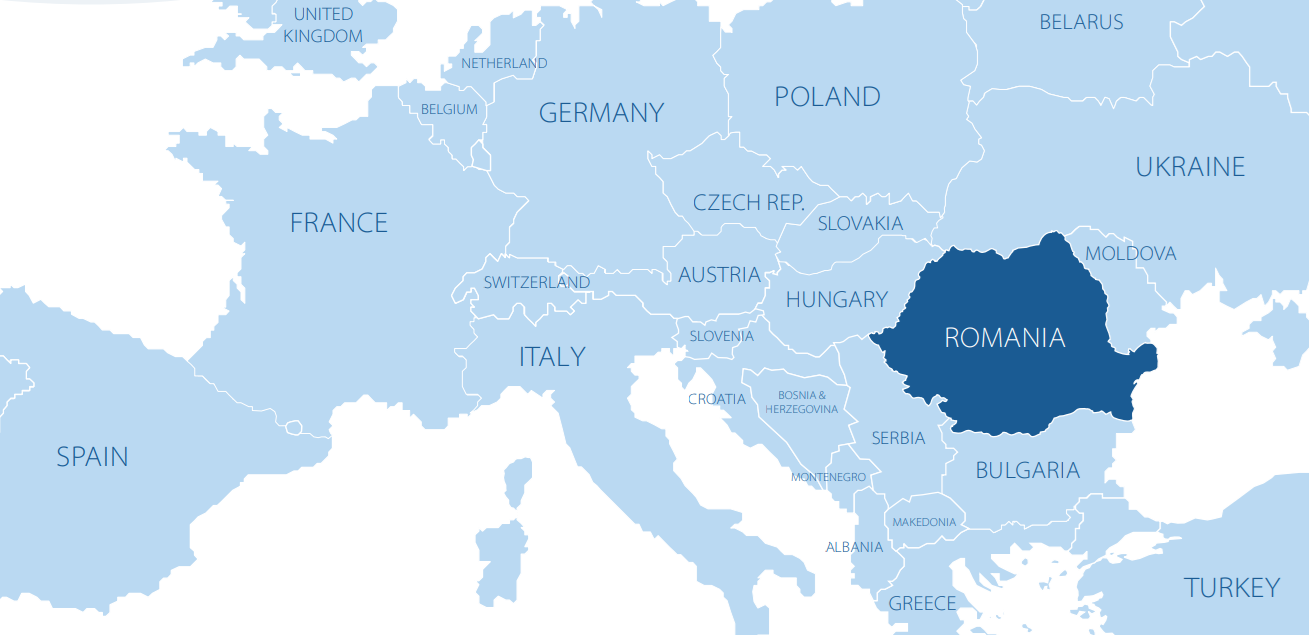
In this rapidly changing business environment, Romania – and Transylvania in particular – has an IT ecosystem that offers a high level of professional expertise, flexibility, and stability, making the region an attractive choice for long-term international software development partnerships. Below, we outline some of the key factors that contribute to this strategic advantage while outsourcing in Romania.
- High-quality STEM education: Over the past few decades, the country has established an internationally renowned education system in computer science and engineering, from high school up to the doctoral level. Many students from other European countries – and even from other continents – attend the country’s universities, later succeeding in their professions in Western Europe and other parts of the world.
- Year after year, university students are preparing themselves more and more thoroughly for the challenges of the job market, supplementing their curriculum with mentorship provided by experienced professionals. As a result, by the end of their studies, many of them are able to begin their careers not only with theoretical knowledge, but also with practical experience and marketable skills. All of this ensures a continuous flow of new talent to achieve the necessary scalability of projects.
Challenges Turned into Opportunities
- Moreover, in recent decades, Romania and Eastern Europe have turned their infrastructural disadvantages into advantages in the IT industry. By building on relatively low investment requirements compared to other sectors, combined with knowledge capital and lower labor costs than in Western Europe, the region has secured a prominent position on the global outsourcing map. As a result, Romania’s IT community now has decades of experience in international outsourcing, which has led, among other things, to a high level of competence in foreign languages. The time zone close to that of Western Europe is also an undeniable advantage. Furthermore, the most experienced professionals have navigated the widest variety of outsourcing models – from the early days of body leasing to today’s web-based solutions –, adapting continuously to the sector’s needs in an effective and professional manner. And they will continue to do so in the future.
- Thanks to the flexibility and innovative capabilities developed over the decades, the country’s digital infrastructure is also advancing rapidly. Using the most modern tools and technologies, including AI, is a given.
- However, what gives this region additional advantages over business communities on other continents is their EU membership and the regulatory and business environment that comes with it. This guarantees secure project execution for the contracting party, which is becoming an increasingly important requirement in 2026.
Additional Competitive Advantages in Transylvania
Within Romania, Transylvania holds a particularly strong position among outsourcing destinations. Each of the cities and regions have their strengths and unique qualities worth exploiting.
- As one of the country’s most significant IT hubs, Cluj-Napoca offers a broad pool of professionals, experience both in startups and large organizations, as well as access to the latest technologies and cutting-edge business processes. In teams accustomed to the pace of a major city, quick implementation is just as essential as professionalism.
- Brașov is one of the country’s fastest-growing IT hubs, attracting more and more international technology companies that are capitalizing on its strong engineering and technical background, its advantageous location and international accessibility. The appealing living environment and the region’s visible development are also having a very positive impact on the startup ecosystem. As a result, local professionals are not only choosing to stay but are also contributing to regional innovation.
- An advanced industrial and engineering culture, along with a commitment to high-quality standards, has always been an important part of Sibiu’s economic history. The region excels in the automotive industry and industrial digitization. With its balanced labor market, strong western European connections and long-term international partnerships, it has proven that it remains an important player in the national market.
- The advantageous geographic location of Oradea, situated along the border, along with its modern business infrastructure and dynamic economic environment, have contributed to making it an ideal international business hub. The growing tech startup scene and the incoming investments turn Oradea into a bridge between the national and Western market.
- Târgu Mureș offers increasingly advanced technical and IT training. Close cooperation between companies and the academic community ensures a steady supply of professionals and the transfer of market-ready knowledge, and at the same time, price formation tends to be more favorable here than in a larger city.
- Szeklar Land – and specifically Odorheiu Secuiesc – contributes to the region’s competitiveness through the stable engineering communities often found in smaller towns, lower employee turnover compared to larger cities, and teams with broad experience that collaborate over the long term. Closer relationships within teams, a more nature-oriented and balanced living environment, and lower cost of living can all contribute to employees’ mental well-being.
The Combination Makes a Difference
A company with offices in multiple cities in Transylvania benefits not only from these individual qualities, but also from their combination, serving both innovation and long-term project stability.
Companies that are present in multiple cities:
- Can access a wider community of professionals and are not fully dependent on the local labor market. If they have difficulties recruiting in one city, they still have options in others, also ensuring faster scalability.
- Different departments have access to a broader and more diverse knowledge base and social capital, which they can share with one another to help everyone grow.
- Diverse teams treat differences within the group as learning opportunities rather than problems. This increases flexibility and strengthens team cohesion.
Why This Matters in the AI Context
Artificial intelligence is profoundly transforming the software development process. The advantage is that it speeds up routine tasks, provides developers with new tools, and enables the implementation of increasingly complex solutions. At the same time, the role of experienced professionals is becoming increasingly important in today’s IT sector – professionals who are able to understand business needs, design the appropriate architecture, oversee AI-generated solutions, and ensure quality, security, and regulatory compliance. Under the current circumstances, a company with developer teams in multiple cities can more easily form multidisciplinary teams capable of handling all these tasks.
In this context, therefore, a true advantage in outsourcing does not come from the latest technologies alone. The organizational and professional background that can apply them responsibly, securely, and efficiently to serve clients is just as important.
by: Katalin Bálint